
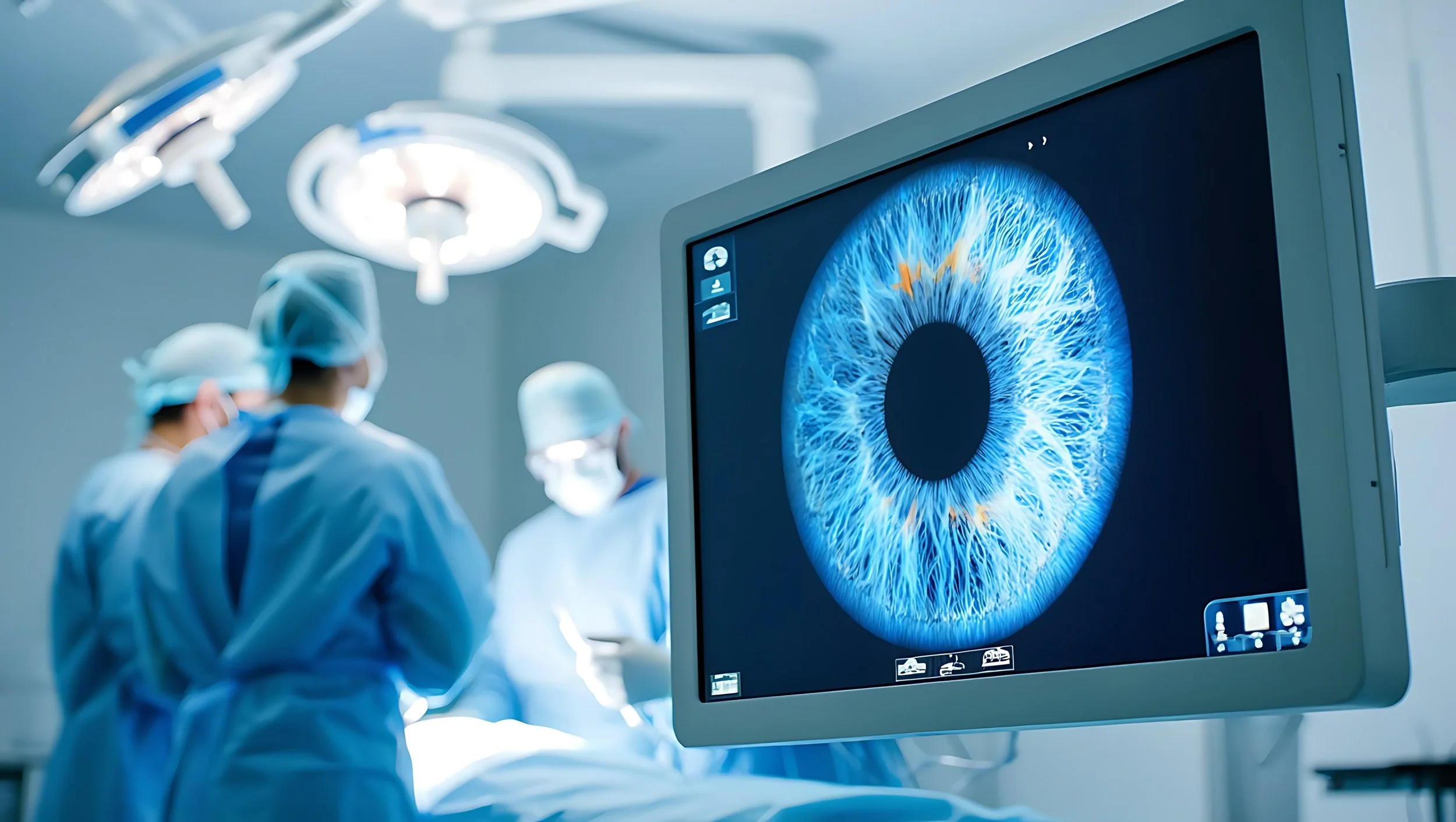
Glaucoma Surgery
Find out how glaucoma starts, the latest surgical treatments available, and frequently asked questions.
Understanding Glaucoma
Glaucoma is a group of eye diseases that damage the optic nerve, the crucial link that transmits visual information from the retina to the brain. The optic nerve has about one million fibers, each working like a cable to carry the electrical signals needed for vision.
In most types of glaucoma, damage occurs when the pressure inside the eye, called intraocular pressure (IOP), becomes too high for the optic nerve to handle. Glaucoma can also develop even when eye pressure seems normal, which is known as normal-tension glaucoma. As more nerve fibers are lost over time, blind spots can appear in your side vision and may slowly move toward the center if not treated.
Glaucoma usually develops slowly and does not cause pain, so most people do not realize they have it until they have already lost some vision that cannot be restored. Once the optic nerve fibers are lost, they cannot regenerate.
The best way to catch glaucoma early is to have regular, thorough eye exams that check your eye pressure, look at the optic nerve, and include a dilated eye exam. If glaucoma is found early, treatments like prescription eye drops, laser therapy, or surgery can lower eye pressure and help protect your vision for many years.
Types of Glaucoma Surgeries
Frequently Asked Questions
-
Exercise for glaucoma patients can be beneficial. Research has shown that low-impact aerobic exercises lower intraocular pressure (IOP) in glaucoma patients.
-
In the retina, neurons (nerve cells) and the optic nerve are not regenerated once they are lost.
-
Like any surgery, there are risks, such as infection or too much pressure drop. But when glaucoma threatens vision, the benefits often outweigh the risks. Your doctor will talk through your options and help you make the right call.
-
Glaucoma surgery is typically performed under local anesthesia, meaning patients remain awake but do not feel pain. Some mild discomfort or irritation may occur after the procedure, but it is usually temporary. Your doctor will provide post-operative care instructions to help manage any discomfort and ensure a smooth recovery.
-
Generally, patients have certain restrictions after surgery and will need follow-up appointments with their surgeon. You may be required to wear an eye shield and take prescribed medications. Patients should avoid swimming and similar exposure to water following glaucoma surgery.
-
Recovery time varies depending on the type of surgery performed. Most patients experience some improvement within a few weeks, but full recovery may take several months. It is important to follow all post-operative instructions and attend follow-up visits to monitor healing.
-
When glaucoma surgery is performed to lower the eye pressure, it may sometimes lower the pressure too much. The risk of having low eye pressure after glaucoma surgery varies depending on the type of surgery and various patient factors. Low eye pressure after glaucoma surgery is usually a temporary issue that resolves as the eye heals. If the low eye pressure is persistent and causing vision loss, then surgical treatment may be considered.
-
Fortunately, for most patients the answer is no. Blindness does occur from glaucoma, but it is a relatively rare occurrence in about 5% of glaucoma patients. However, sight impairment is more common and occurs in about 10% of patients. Correct treatment and follow-up will stabilize the vast majority of patients with glaucoma. By working with your doctor to manage your glaucoma, a favorable outcome is more likely.
-
Glaucoma is not curable, and vision lost cannot be restored. With medication, laser treatment and surgery, it is possible to slow or stop further loss of vision.
Review important steps to help you prepare safely and confidently for surgery: