
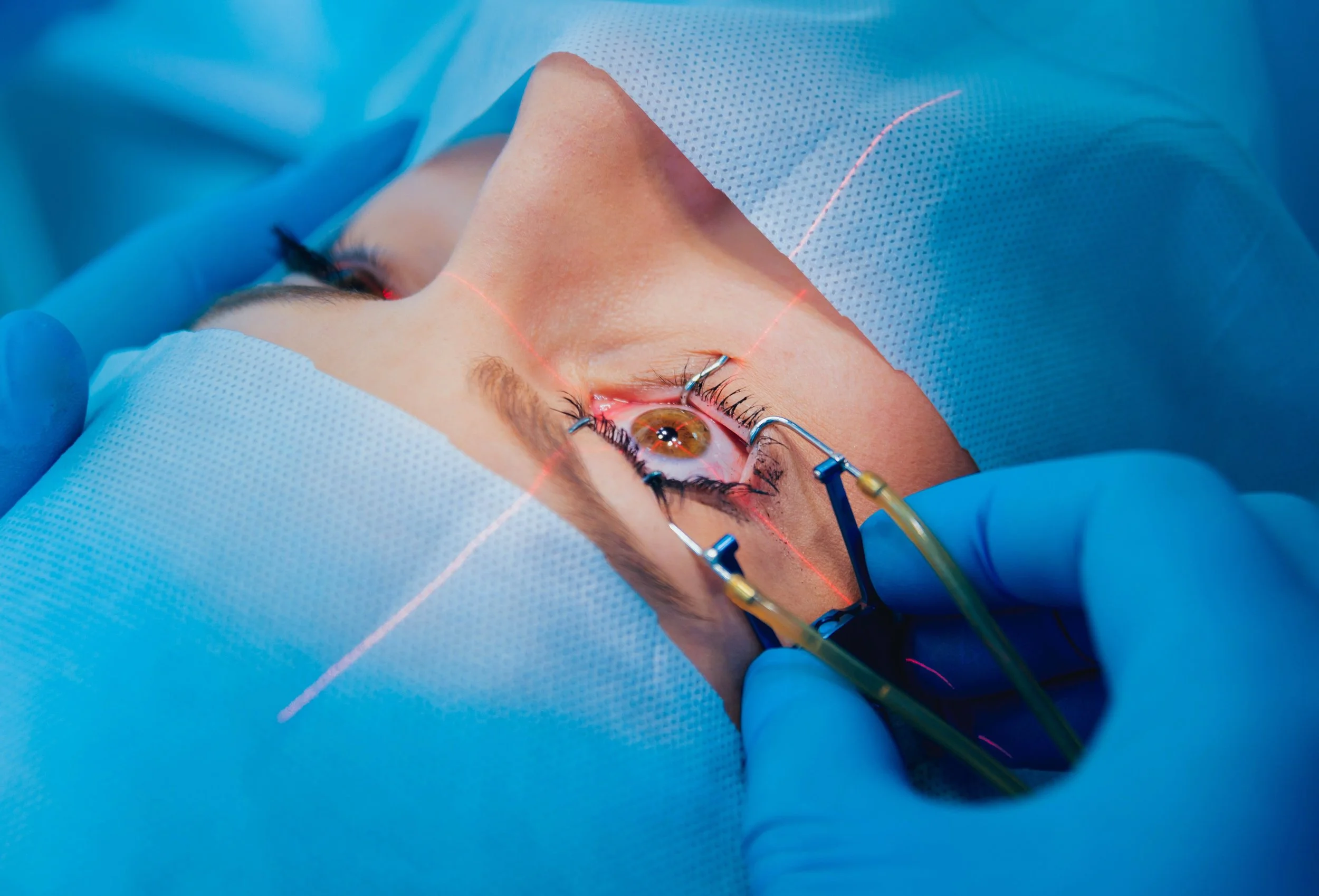
Cornea Surgery
Discover the range of advanced corneal procedures our specialists perform.
Understanding the Cornea
The cornea is a clear, dome-shaped layer at the front of your eyes, similar to a windshield. It keeps out dust, germs, and other particles. Its special shape is important for focusing light and helps protect against ultraviolet rays. Because it is the outermost part of the eye, the cornea can be easily injured. The cornea is made up of six different layers:
Epithelium: This is the outer layer of the cornea and acts as a shield between your eye and the environment. It is very sensitive, with many more pain receptors than your skin, which helps you react quickly to threats or irritants.
Bowman’s Layer: Made mostly of collagen fibers, this strong layer gives the cornea its shape and helps it keep its form.
Stroma: As the cornea’s thickest section, the stroma reinforces the corneal structure and plays a key role in bending light so it can be properly focused onto the retina.
Pre-Descemet’s Layer (PDL): This layer acts as a tight barrier, firmly separating the fluid inside the eye from the outside air.
Descemet’s Layer: Despite being thin and flexible, this layer is exceptionally durable. It contributes to the eye’s structural integrity and acts as a defense against trauma and infection.
Endothelium: This plays a crucial role in regulating the fluid levels within the cornea and the interior of the eye. It ensures that the stroma maintains the right amount of moisture for the cornea to function properly.
Each layer of the cornea has its own job, but together they make the cornea very strong. This design is like safety glass in car windshields, where layers of glass and plastic are joined to make them tougher and more durable.
Types of Cornea Surgeries
Frequently Asked Questions
-
Healing times vary from person to person and are influenced by how complicated the surgery was and the size of the pterygium that was removed. In straightforward cases, recovery often takes just a few weeks. However, if a larger growth was treated, it might take several months for your eyes to fully recover. It’s normal to have some redness or discomfort as your eyes heal.
-
It is possible for a pterygium to return after it has been removed surgically. The likelihood of recurrence depends on factors such as the type of surgery performed, the patient’s age, and how well the eye is cared for afterward. Using polarized sunglasses and steering clear of environments that are dusty, windy, or have intense sunlight can reduce the chances of a recurrence.
-
This will depend on your surgeon's instructions, but it is typically 24-36 hours.
-
After DSEK surgery, it generally takes one to two months for your vision to fully recover. Improvement happens gradually, and it is common for vision to be even blurrier during the initial week following the procedure than it was beforehand.
-
Across the country, numerous eye banks operate to collect, preserve, and supply donor tissue. The ease that corneal donor tissue is obtained depends on its availability.
-
One remarkable feature of corneal tissue is its lack of blood vessels. As a result, donor corneas that meet the required screening standards can be transplanted into any recipient, no matter their blood type or genetic background.
Review important steps to help you prepare safely and confidently for surgery: